
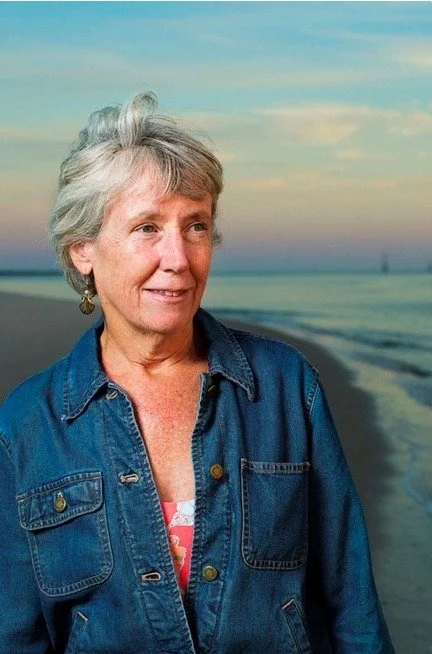
Dr. Cindy Van Dover is a pioneering deep-sea biologist and explorer whose career took her to some of the most extreme habitats on Earth. In 1990 she became the 49th person — and first woman — certified to pilot the deep-submergence vehicle Alvin, ultimately logging nearly 100 dives to the ocean floor, a mile and a half or more beneath the surface. Her research on chemosynthetic ecosystems, the communities of giant tube worms, mussels, shrimp, and bacteria that thrive around hydrothermal vents by living off chemical rather than solar energy, helped define an entirely new field of ocean science, and her graduate work revealed that scalding "black smoker" vents actually glow, uncovering a hidden source of light in the deep sea. She went on to direct the Duke University Marine Laboratory and later served as Harvey W. Smith Professor of Biological Oceanography at Duke's Nicholas School of the Environment, where her focus expanded into deep-sea conservation and environmental management, especially the challenge of balancing seabed mining with protecting fragile vent ecosystems. Now retired as professor emeritus, she remains one of the most influential voices in deep-sea exploration.
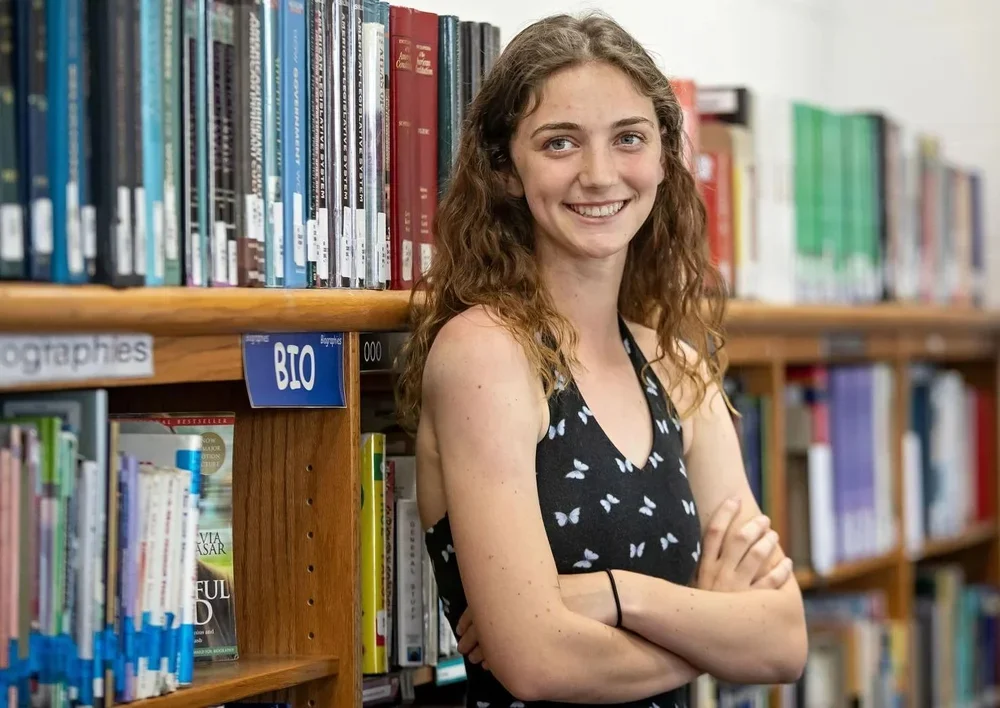
In this episode, Annika is joined by brand-new co-host Lacy Walker, a high school sophomore with her own passion for marine biology, to talk with Dr. Van Dover about her journey from poking around New Jersey tide pools as a kid to piloting a submarine on the seafloor. She shares the story of persistence that got her into the Alvin pilot program after early rejections, describes what it's like to watch tube worms and swarming shrimp thrive beside a 350°C black smoker, and speaks candidly about facing harassment and self-doubt as one of few women in a male-dominated field. The conversation also touches on her mentors, her recent love of CrossFit, and the advice she'd give any young woman chasing a dream in science: stay curious, learn to communicate your ideas, and don't be afraid to just ask.
Key Topics Discussed
Introduction to Dr. Cindy Van Dover
Retired deep-sea biologist and explorer; 49th person and first woman certified to pilot the deep-submergence vehicle Alvin
Discovered new species of mussels, shrimp, tube worms, and bacteria over the course of her research
Former Director of the Duke University Marine Laboratory and Harvey W. Smith Professor of Biological Oceanography, now professor emeritus
Childhood and Early Fascination with the Ocean
Grew up on the coast of New Jersey, about five miles from the beach
Spent summers exploring jetties and rocky tide pools, fascinated by sea stars, horseshoe crabs, blue crabs, and worms
Drawn to invertebrates specifically because they were built so differently from familiar animals like dogs, birds, or cats — curious how and why they worked the way they did
Says that curiosity about her own shoreline made marine biology an easy, natural path
Finding Her Way to Woods Hole
Studied at Rutgers as an undergraduate, where Woods Hole Oceanographic Institution was already "mecca" for anyone interested in deep-sea science
First learned about the submersible Alvin from a book she read in grade school
Started a PhD at UCLA, but left with a master's degree after experiencing workplace harassment from an advisor (more below)
Eventually made it to Woods Hole, where she earned her PhD and trained as an Alvin pilot
Discovering Hydrothermal Vents and Chemosynthetic Ecosystems
Hydrothermal vents were first discovered on the seafloor in 1977, just as she was finishing college — she joined the second biology expedition to study them
Explains chemosynthesis: seawater seeps into cracks in the seafloor along volcanic spreading ridges, gets superheated and chemically altered by the rock, then erupts back out as mineral-rich "black smokers" that microbes can live off of instead of sunlight
Her first-ever dive in Alvin was to a vent site called Rose Garden, on the Galápagos Spreading Center — giant white-and-red tube worms, dinner-plate-sized clams, warm shimmering water
Describes the deep ocean as normally desert-like, but hydrothermal vents as oases of exuberant life — "what a playground for a biologist"
As a graduate student, discovered that black smoker vents are hot enough to glow, revealing an unexpected source of light in the total darkness of the deep sea — one of her PhD publications
Life Aboard the Submersible Alvin
Alvin dates back to 1964 and has been rebuilt so many times that no original part remains; it famously dove on the wreck of the Titanic with Bob Ballard
A three-person, untethered, battery-powered submersible with manipulator arms for sampling and small viewports for observation
Typical dive: about an hour and a half down, five hours on the bottom, an hour and a half back up
Lights stay off during descent to conserve power (in the era of lead-acid batteries) and are switched on only near the seafloor
No physical requirements to ride along as an observer beyond fitting through the hatch and not being claustrophobic; new passengers do a "deck dive" beforehand to make sure they'll be comfortable once the hatch is shut
Becoming Alvin's First Female Pilot
Motivated by watching pilots dive day after day while scientists — especially students — were lucky to get one or two dives per cruise
Initially asked to be hired and trained as a pilot and was turned down; a follow-up funding proposal to the National Science Foundation was also rejected, with reviews she found "unbearable to read"
Persisted by volunteering to help with Alvin's mandatory three-year rebuild, writing the submarine's first-ever maintenance manual by shadowing the pilots and technicians
Was finally allowed onto the payroll to train as a pilot after completing her PhD, splitting her days between finishing her dissertation and working with the Alvin team
Certified as the 49th Alvin pilot in 1990 — the first woman to do so — after flying roughly 40 dives as pilot-in-command and nearly 100 dives total on the seafloor
Facing Harassment and Pushing Through Setbacks
While pursuing what she thought would be her PhD at UCLA, was repeatedly propositioned by her advisor and found no institutional support when she reported it
Chose to leave with a master's degree rather than continue in that environment
Faced resistance from some Alvin pilots early on who didn't think she belonged, partly because she wasn't a trained engineer like the small pilot corps needed
Felt outsized pressure as the first woman attempting to become a pilot, worried that failure would reflect on women broadly, not just herself
Describes getting through the hardest stretches simply by persisting: "you just push through"
Physical Fitness and CrossFit
Started CrossFit 13 years ago at her graduate students' encouragement, after years of academic life left her out of shape
Now attends class five mornings a week at 6 a.m. and calls it one of her core communities
Proud of once deadlifting 205 pounds
Notes she's never felt imposter syndrome in CrossFit the way she has in academia — progress there is simply measurable and honest
Imposter Syndrome and Self-Doubt
Says imposter syndrome is real and hits everyone, including her, especially during her early, non-engineering years training as a pilot
Her approach: acknowledge it, let it go, and keep moving forward
Believes it helps just to know how common the feeling is
Deep-Sea Conservation and the Future of Ocean Mining
Notes that early deep-sea researchers rarely thought about conservation because so few people were exploring the deep ocean
Growing interest in deep-sea mining has made conservation and environmental management urgent, current research areas — including for her own graduate students
Draws a parallel to acid rain, where it took decades to trace cause and effect — worries about doing lasting, hard-to-reverse damage to deep-sea ecosystems before we understand the consequences
Emphasizes that today's scientists are working on how to both monitor deep-sea environments and figure out whether and how they can be restored after disturbance
Proudest Accomplishments
Earning her PhD
Becoming certified as an Alvin pilot, calling it the hardest thing she's accomplished
In CrossFit, deadlifting 205 pounds
Mentors and Role Models
Notes that nearly all of her mentors were men, reflecting the era she came up in as one of few women in her field
Credits Alvin pilots Dudley Foster and Pat Hickey as essential to her success — and for teaching her "how to swear really well"
Credits PhD advisors Fred Grassle (Woods Hole) and Bob Hessler (Scripps) for her entry into deep-sea science
Credits her longtime CrossFit coach, Todd, for keeping her fit and healthy
On Being a Mentor Herself
Says she doesn't hesitate to speak to students or visit schools when asked, but doesn't consider herself an especially active mentor
Sees herself as a mentor to people generally rather than to women specifically — just as she wanted to be known as "a pilot," not "a female pilot"
Advice for Young Women Pursuing Marine Science
Key lesson: "you have to go fish if you want to catch fish" — opportunities often come simply from asking
Landed her first research cruise by walking up to a stranger at a conference and asking if there was room for her
Stresses the enduring importance of writing and clear communication, however that's expressed today — whether through formal publishing or platforms like social media and podcasting
Encourages developing an outside passion or skill (music, art, or anything else) that sets you apart from other candidates
Final Question: One Quality to Embrace
Names curiosity and persistence as the qualities she'd choose above all
Recalls being told she "wasn't college material" and shouldn't go to college — and doing it anyway
Advises staying skeptical of being told what you can't do, and staying curious
Memorable Quotes
"You have to go fish if you want to catch fish... you have to ask if you want to go do stuff."
"I don't want to be known as a female pilot. I want to be known as a pilot."
"The imposter syndrome is real, and it hits you, and you just have to let it go and go on and see what happens next."
"I was told I shouldn't go to college, that I wasn't college material. Well, I thought differently."
"Being willing to not listen to what people tell you when you know better is a good thing to bear in mind. And then stay curious."
Show Notes & Links of Interest
Timestamps pulled from the raw interview transcript (.vtt). Double-check against the final mastered/edited audio before publishing, since intro music, edits, or trims could shift them slightly.
[00:00 - 01:28] Introduction and Episode Preview
Hosts introduce Dr. Cindy Van Dover and welcome new co-host Lacy Walker, a high school sophomore interested in marine biology
[01:28 - 02:12] Guest Introduction
Dr. Van Dover introduces herself as a (now retired) deep-sea biologist and explorer
[02:12 - 05:07] Chemosynthetic Ecosystems Explained
Describes the 1977 discovery of hydrothermal vents and how chemosynthesis powers life there
[05:07 - 06:05] First Dive to Rose Garden
Her first-ever Alvin dive, to the Rose Garden vent site on the Galápagos Spreading Center
[06:05 - 06:56] Light in the Deep Sea
Lights on Alvin, and her graduate-school discovery that black smoker vents glow
[06:56 - 09:35] Deep-Sea Conservation and Mining
Why conservation wasn't on early researchers' radar, and today's push to balance deep-sea mining with protecting vent ecosystems
[09:35 - 11:31] Childhood on the Jersey Shore
Tide pools, jetties, and an early fascination with invertebrates that led her to marine biology
[11:31 - 12:32] Getting to Woods Hole
Why Woods Hole was "mecca," and her path there from Rutgers
[12:32 - 15:02] Inside the Submarine Alvin
How Alvin works, what a dive feels like, and why she wanted to become a pilot
[15:02 - 17:46] Becoming Alvin's First Female Pilot
The rejected funding proposal, writing the sub's first maintenance manual, and finally getting certified
[17:46 - 19:34] Dive Count and Favorite Dives
Nearly 100 dives total, and her favorite hydrothermal vent sites on the Mid-Atlantic Ridge
[19:34 - 21:04] Physical Demands of Diving vs. CrossFit
Why Alvin dives require almost no physicality, and how CrossFit changed her fitness
[21:04 - 21:48] 13 Years of CrossFit
Started at her graduate students' urging; now a daily 6 a.m. community
[21:48 - 24:45] Hardest Career Challenge
Facing harassment from her UCLA advisor, and resistance from some Alvin pilots early in training
[24:45 - 26:00] Imposter Syndrome
How she copes with self-doubt — and why she never feels it in CrossFit
[26:00 - 27:41] What Is CrossFit?
Breaking down a typical workout of the day
[27:41 - 28:21] Proudest Accomplishments
Her PhD, Alvin certification, and a 205-pound deadlift
[28:21 - 30:28] Mentors and Role Models
Dudley Foster, Pat Hickey, Fred Grassle, Bob Hessler, and CrossFit coach Todd
[30:28 - 32:08] Navigating a Male-Dominated Field
Adopting — and later unlearning — "male" habits like interrupting in meetings as Duke Marine Lab director
[32:08 - 33:51] Advice for Young Women Starting Out
"You have to go fish if you want to catch fish" — the power of just asking
[33:51 - 36:40] Advice for Aspiring Marine Biologists
The importance of writing, building a body of work, and having an outside passion that sets you apart
[36:40 - 40:20] Empowered Women Empower Women
Her take on mentorship — and why she'd rather be known simply as "a pilot," not "a female pilot"
[40:28 - 41:31] Final Question: One Quality to Embrace
Curiosity and persistence — and the story of being told she "wasn't college material"
[41:31 - 44:00] Closing Thoughts and Advice for Lacy
Combining marine mammal research with deep-sea science; well-wishes for Lacy's future
[44:03 - 45:02] Post-Interview Debrief and Sign-Off
Hosts reflect on the conversation; outro
Hosts

About Dr Van Dover
Cindy Lee Van Dover served as Pilot-in-Command of the deep-sea research submersible ALVIN (1990-1991) and ultimately retired as a Distinguished Professor of Biological Oceanography at Duke University in 2023. Dr. Van Dover’s research focused on the study of chemosynthetic ecosystems and on emerging conservation themes related to proposed deep-sea mining and environmental management. She was an active participant and Chief Scientist in numerous federally funded field programs at sea. Van Dover was the curator of Beyond the Edge of the Sea, a traveling exhibition of illustrations of deep-sea organisms and environments by artist Karen Jacobsen. She is the author of Deep-Ocean Journeys, an account of her training to be a submersible pilot and of some of the ecosystems she has explored, and of The Ecology of Deep-Sea Hydrothermal Vents, which was the first textbook on this subject. She was a Fulbright Fellow in France, a Fulbright Arctic Chair in Norway, and the recipient of honorary degrees from the University of Bergen (Norway) and the Université Catholique de Louvain (Belgium) for her contributions to deep-sea science and science communication. Her 1-rep max deadlift is 205 pounds.