
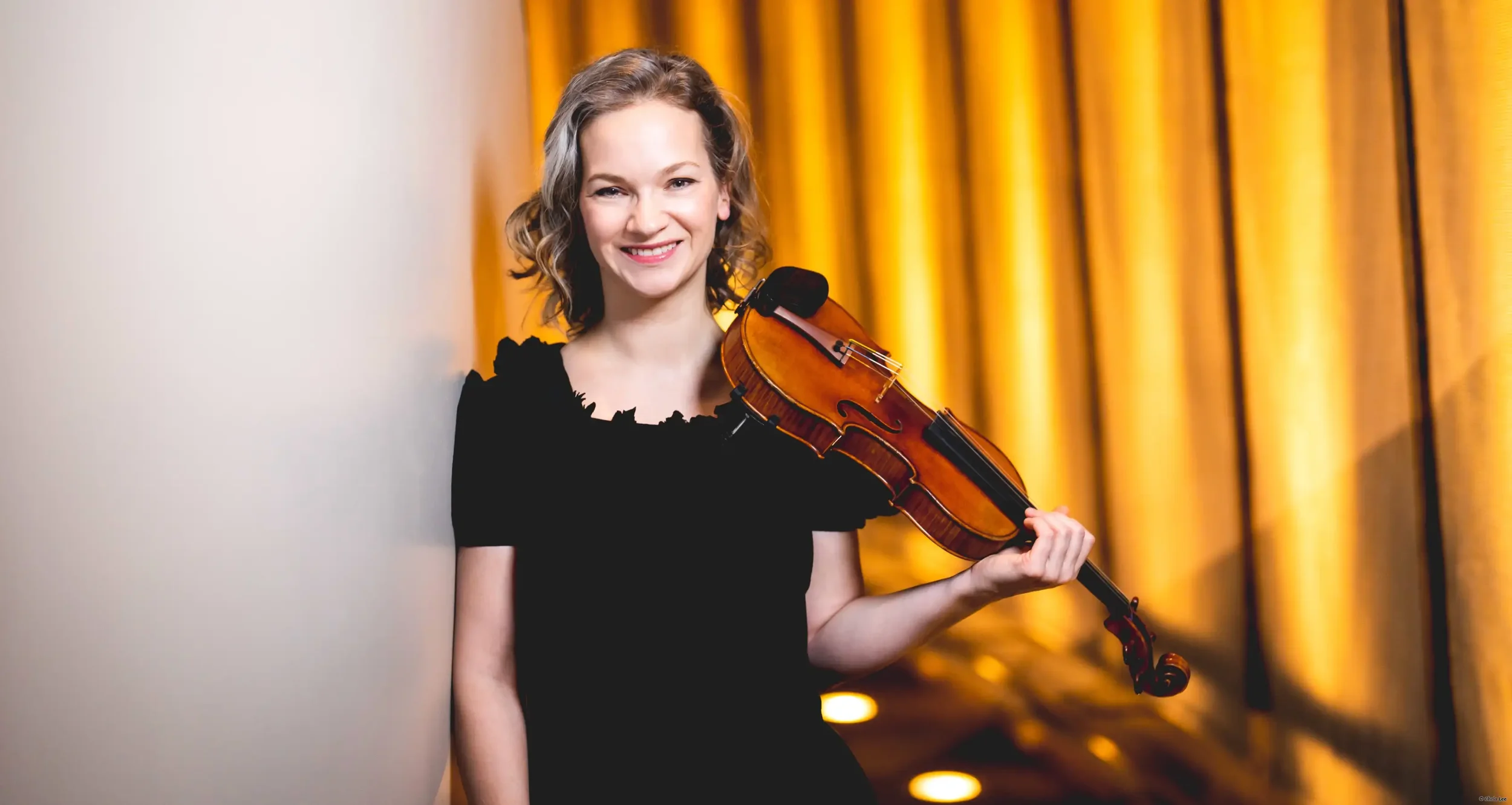
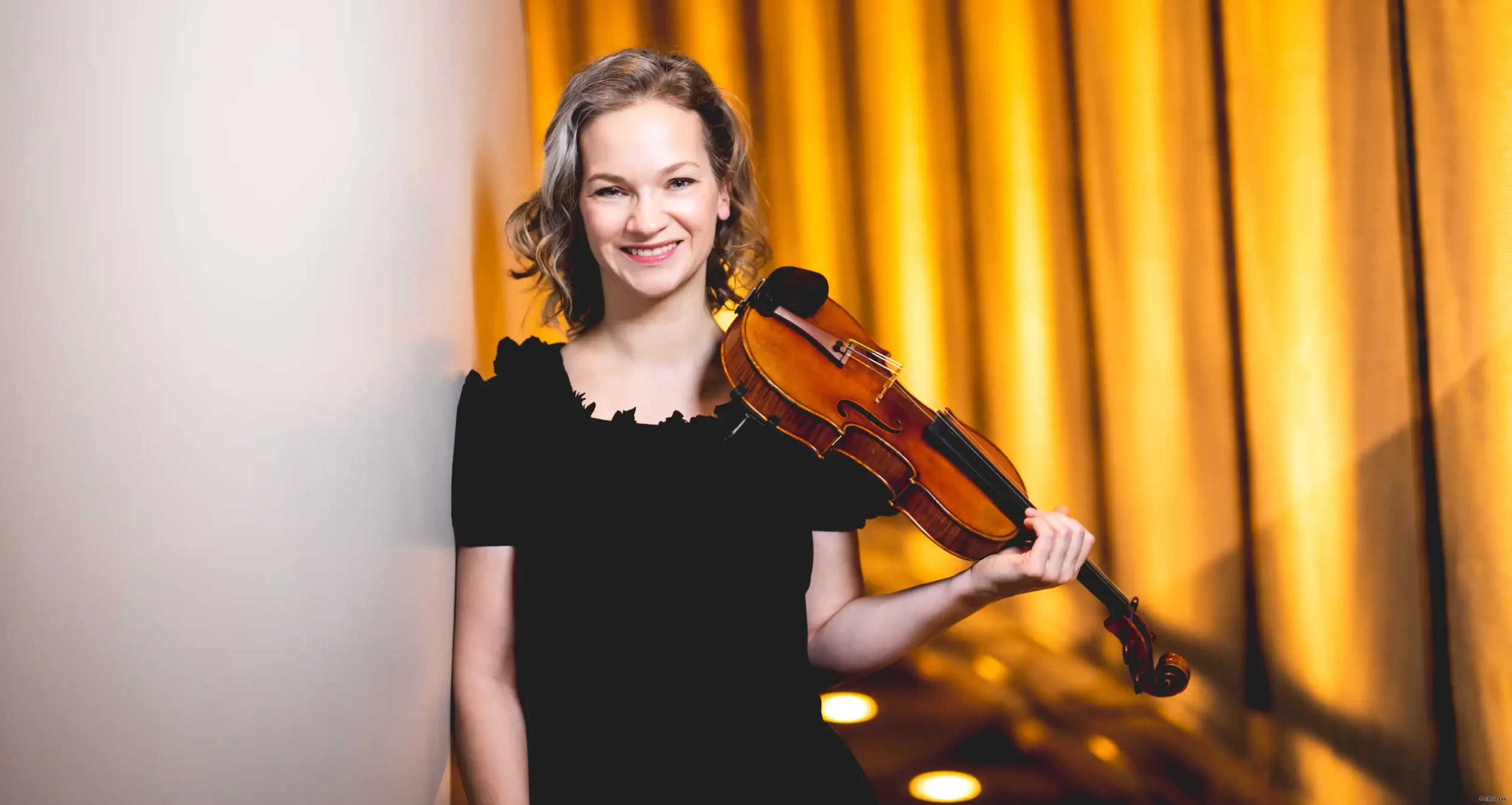
Hilary Hahn is a three-time Grammy Award–winning violinist, widely regarded as one of the greatest violinists of her generation. Since beginning violin at age four in Baltimore, she has built a career as a solo touring artist, chamber musician, and teacher, performing with the world's leading orchestras and conductors.
In this episode, Ms. Hahn joins hosts Annika and Claire for a candid conversation about her musical journey — from her earliest training and the emotional relationship musicians build with their instruments, to imposter syndrome, the real meaning of "progress" in practice, and the difference between compromise and sacrifice. She shares the on-stage breakthrough that changed how she performs, offers advice for young women pursuing ambitious careers, and reflects on what it means to stay true to yourself while chasing a dream.
Key Topics Discussed
Introduction to Hilary Hahn
Three-time Grammy Award winner, widely regarded as one of the greatest violinists of her generation
Career as touring soloist, chamber musician (with pianists), and orchestral soloist
Also an active teacher
Childhood and Early Influences
Started violin at about age four, grew up in Baltimore
Studied through the Suzuki method, learning alongside a peer group of similarly aged students
Credits strong teachers, parental support, and being an only child (more one-on-one attention) for her rapid progress
Attended public school through the beginning of fifth grade, then transitioned to homeschooling out of personal interest, not necessity
Kept separate friend groups — non-musician school friends and musician friends from the Peabody Prep program on Saturdays — and has carried that pattern of varied social circles into adulthood
Didn't grow up with TV or video games; loved reading, making things, playing piano, and taking ballet
The "Backup Plan" and Self-Motivation
For years, kept an alternate life "in her head" (something in visual arts, writing, or teaching) as a mental release valve from the pressure of a music career
A couple of decades in, realized there was no backup plan — she'd simply need to be "all in," but in a healthy way
Still takes an annual break from performing, plus a longer sabbatical roughly every ten years, to check in with herself
Describes herself as best self-motivated, which let her calibrate her own workflow and pace
Navigating a Career in the Social Media Era
Reflects on how much harder it was to control your own narrative before social media — other people were often "telling your story"
Social media gave artists direct access to audiences, but created a new challenge: balancing the audience's desire for proximity with an artist's need for private space to evolve
Notes this is an open, ongoing debate among musicians today, without a single right answer
Imposter Syndrome
Has experienced it, and reframes it as often being about a gap between who we think others expect us to be and who we actually are — "fake expectation syndrome"
Encourages doing your work, showing up, and being as responsible as you can be — "the rest is irrelevant"
Believes staying true to yourself is a slower but truer path, and that the right people find you over time
Sees social media as an upside here too — steady, authentic work spreads by word of mouth even without heavy self-promotion
What "Progress" Really Means in Practice
Unlike a painting, music isn't something you can pause and return to exactly where you left it — you can't fully "audit" your own playing
Progress isn't linear or promised day to day; sometimes progress means ruling out what isn't working
The most frustrating, stuck periods are often when the most groundwork is being laid — breakthroughs can arrive suddenly after weeks of feeling stuck
Encourages staying patient and productive through frustration rather than giving up
Proudest Accomplishment: Staying Present
Names learning to stay in the moment — even an uncomfortable one — as her proudest, most pivotal accomplishment
Traces the breakthrough to her first solo Bach tour, roughly eight years prior, when she was overwhelmed by internal doubt mid-performance
By the third or fourth concert, learned to let the music "talk to her" and trust her own ideas in real time, rather than overthinking ahead
Has since applied that same in-the-moment mindset well beyond performing, to other areas of life
Solo vs. Ensemble Performance
The "stay present" mindset changed how she experiences both solo and group performance, making it easier to listen and respond to fellow musicians in real time
Doesn't feel it created a preference for one format over the other — instead, it made all performing feel more authentic and enjoyable
The Story of Her Violins
Found the violin she'd play for roughly 25 years around age 12; it belonged to friends of her teacher and carried personal, emotional significance
Eventually switched to a different instrument by the same maker, describing the change as a "fresh start" after so much personal history had accumulated on the original
Currently experimenting with a slightly smaller violin for physical comfort — a new way of thinking about instrument fit
Describes a "working theory" that dissatisfaction with an instrument often spikes closest to high-pressure events, and that the story or narrative you hold about your instrument shapes whether it becomes a "supportive friend" or a source of doubt
Mentors and Role Models
Cites her teachers as some of her biggest influences and describes teachers "of all subjects" as heroes growing up
Grew up listening to historic recordings of violinists born in the early 1900s, which shaped her ear early on
Has since developed her own approach, built on what she inherited from teachers and those recordings
Being a Role Model to Her Own Students
Prioritizes listening to what students are trying to do rather than telling them how to play
Wants students to define their own interpretation, not decode a "right answer" the teacher already has in mind
Guides students to think through career goals and personality fit while still in the relative safety net of school
Sees her role as introducing students to many options and standards, while ultimately respecting that "if you don't feel it, you can't make it work"
Talent vs. Hard Work
States plainly that hard work and grit matter more than natural talent
Natural ability can be misleading — without grit, early success can give way to frustration when the work gets hard
Believes those without natural talent but with persistence can catch up, and arrive already knowing how to work and how they learn
Naturally talented people eventually hit a point where "the gears really grind" and must learn to push through, just later than others might
The ideal combination is both, but neither is required on its own
Advice for Young Women Starting a Career
The core advice: listen to your instincts, even when they're uncomfortable or at odds with what others say
Notes that certain groups of people are told "no" more often than others — repetition doesn't make advice correct for you
Encourages figuring out who can help you understand yourself better without ever losing your own sense of self, especially when choosing a teacher or mentor
Emphasizes that you always have choices and options, and that regularly listening to yourself early on prevents identity crises or later course corrections
Women Supporting Women in the Industry
Has felt supported broadly, including by male mentors who created opportunities and treated her with respect
Works with an almost entirely female team (manager, assistant, head publicist) — not a deliberate policy, but a reflection of her values
Reframes "empowered women empower women" as a call to step into the role of empowering others rather than waiting to be empowered
Advises actively creating opportunities for others when creating opportunities for yourself, and being thoughtful about who you bring along
Final Question: One Mindset for Girls Chasing Their Dreams
Warns against getting so caught up in "the chase" that you lose sight of why you started, jumping at any opportunity that seems adjacent to the goal
Cautions that each compromise of yourself builds on the last, gradually pulling you away from who you are
Recommends continually checking in: Is this something I believe in? Is this still me? Do I have a plan to get back if I step outside myself?
Describes the healthier path as slower but truer — "building a brick wall, one brick at a time" rather than a flash that leaves you with "a burst bubble"
Compromise vs. Sacrifice
Shares a distinction it took her decades to learn: compromise is doing something you didn't originate but can embrace without giving anything up; sacrifice is giving up something that mattered, while still being able to live with it
Realized she had long confused the two, which shaped decisions throughout her life and career
Sees the distinction as pivotal not just personally, but in musical interpretation and collaboration
Memorable Quotes
"It's not a flash and then you are left with a poof, like a burst bubble. It's actually building like a brick wall, one brick at a time, thoughtfully, and you're honoring yourself along the way."
"I think imposter syndrome might be more related to what we think people perceive about us than actually whether we are measuring up."
"You just have to keep on your path of being true to yourself, and people do find you, but it's a slower process, but it's a truer process."
"If you have natural talent, you will hit a point where the gears really grind. So do you then know how to move through that?"
"Empowered women, empower women... we don't have to be the recipients all the time. We can almost immediately step into the role of empowering."
"Compromise is doing something that you maybe didn't think of yourself, but that you like and you can do without any sweat... Sacrifice is you are willing to give up something that maybe was important to you, but you can still live with it."
"Oh, see, you just keep in mind what you want, and then eventually people find you."
Show Notes & Links Of Interest
[00:00 - 01:38] Introduction and Episode Preview
Hosts introduce guest Hilary Hahn, a three-time Grammy Award-winning violinist
Claire shares that Ms. Hahn has been her longtime dream guest and a personal role model in her own seven years of playing violin
[01:38 - 02:18] Guest Introduction
Ms. Hahn introduces herself as a violinist who tours, performs concerts, teaches, and plays solo, with a pianist, and as an orchestral soloist
[02:18 - 05:42] Childhood in Baltimore and Starting Violin at Four
Started violin around age four through the Suzuki method
Studied alongside a peer group of similarly aged students, which she credits for her fast progress
Attended public school through the start of fifth grade, then chose homeschooling out of interest
Kept separate friend groups (school friends vs. Peabody Prep musician friends) — a pattern she's carried into adulthood
[05:42 - 07:51] A Full Childhood Beyond Violin
No TV or video games growing up; loved reading and making things
Also took piano lessons and ballet alongside violin
[07:51 - 09:08] The Backup Plan and Self-Motivation
Long kept an imagined "alternate life" as a mental release valve
Eventually let go of the backup plan and went all in, in a healthy way
Takes annual breaks and a roughly decade-long sabbatical to check in with herself
Describes herself as best self-motivated
[09:08 - 13:02] Career Challenges and the Social Media Era
Discusses how the definition of a "successful path" in music has changed generationally
Reflects on losing control of your own narrative before social media, and the new balancing act between audience proximity and artistic privacy today
[13:02 - 17:14] Imposter Syndrome
Reframes imposter syndrome as often being about others' perceived expectations, not actual performance
Encourages staying true to yourself even when it's a slower path — "your people will find you"
[17:14 - 20:00] What Progress in Music Practice Really Looks Like
Explains why music, unlike visual art, can't be "checked" the way you'd check a painting
Describes how the most frustrating, stuck stretches often precede the biggest breakthroughs
[20:00 - 23:14] Proudest Accomplishment: Learning to Stay Present
Traces her biggest breakthrough to her first solo Bach tour, about eight years earlier
Learned by the third or fourth concert to let the music guide her instead of overthinking in real time
[23:14 - 24:01] Solo vs. Ensemble Performance
Applying the "stay present" mindset made both solo and group performance feel more authentic, rather than creating a preference for one
[24:01 - 27:46] The Story of Her Violins
Found her primary violin at age 12, played it for about 25 years, then switched instruments for a "fresh start"
Currently experimenting with a smaller violin for physical comfort
Shares her theory on how the "narrative" you hold about your instrument shapes your relationship with it under pressure
[27:46 - 28:53] Mentors and Role Models
Cites her teachers and historic early-1900s violin recordings as her biggest formative influences
[28:53 - 31:16] Being a Role Model to Her Own Students
Prioritizes asking students what they want rather than dictating interpretation
Helps students think through career fit and goals while still in school
[31:16 - 33:42] Talent vs. Hard Work
Argues hard work and grit matter more than natural talent long-term
Explains why naturally talented people eventually hit a wall too, just later
[33:42 - 36:47] Advice for Young Women Starting Out
Core advice: listen to your own instincts, even against the grain of others' opinions
Encourages finding mentors who strengthen your sense of self rather than override it
[36:47 - 40:16] Women Supporting Women in the Industry
Discusses her mostly female team and mentors of both genders who supported her
Reframes "empowered women empower women" as an active role to step into
[40:16 - 43:15] Final Question: One Mindset for Girls Chasing Their Dreams
Warns against losing yourself in "the chase" and compromising your way off your own path
Recommends checking in with yourself at every step
[43:15 - 44:33] Compromise vs. Sacrifice
Shares the distinction it took her decades to learn, and how it applies to both life and musical collaboration
[44:33 - End] Closing and Thank-Yous
Hosts and Ms. Hahn exchange thanks; Annika reveals that Ms. Hahn was also Claire's original "dream guest" answer
Hosts
About Hilary Hahn
Three-time Grammy Award-winning violinist Hilary Hahn melds expressive musicality and technical expertise with a diverse repertoire guided by artistic curiosity. Her barrier-breaking attitude towards classical music and commitment to sharing her experiences with a global community have made her a fan favorite. Hahn is a prolific recording artist and commissioner of new works, and her 23 feature recordings have received every critical prize in the international press. Her new role with the Juilliard School follows her earlier tenure as Visiting Artist in Juilliard’s Music Division in the 2023–24 season; recent seasons have also seen her serve as the Chicago Symphony Orchestra’s first-ever Artist-in-Residence, Artist-in-Residence at the New York Philharmonic, and Curating Artist of the Dortmund Festival.
Hahn has personally commissioned and championed works by a diverse array of more than 40 living composers, including Steven Banks, Jennifer Higdon, Jessie Montgomery, and Carlos Simon. Her 2021 recording Paris features the world premiere recording of Einojuhani Rautavaara’s Deux Sérénades, a piece written for Hahn and which she premiered in 2019. Other recent commissions include Michael Abels’s Isolation Variation, Hahn’s recording of which was nominated for a Grammy; Barbara Assiginaak’s Sphynx Moth; Lera Auerbach’s Sonata No. 4: Fractured Dreams, and 6 Partitas by Antón García Abril. García Abril, Auerbach, and Rautavaara were among the 27 composers who contributed to In 27 Pieces: the Hilary Hahn Encores, Hahn's Grammy Award-winning multi-year commissioning project
Hahn has related to her fans naturally from the very beginning of her career. She has committed to signings after nearly every concert and maintains and shares a collection of the fan-art she has received over the course of 20 years. Her “Bring Your Own Baby” concerts create opportunities for parents of infants to share their enjoyment of live classical music with their children in a nurturing, welcoming environment. Hahn’s commitment to her fans extends to a long history of educational outreach. Her social media-based initiative, #100daysofpractice, has transformed practice into a community-building celebration of artistic development; since Hahn created the hashtag in 2017, fellow performers and students have contributed more than one million posts. A former Suzuki student, she released new recordings of the first three books of the Suzuki Violin School in 2020. In 2019, she released a book of sheet music for In 27 Pieces: the Hilary Hahn Encores, which includes her own fingerings and bowings and performance notes for each work.
Hahn is a prolific and celebrated recording artist whose feature albums on Decca, Deutsche Grammophon, and Sony have all opened in the top ten of the Billboard charts. Recent releases include Night After Night, a collection of James Newton Howard’s scores for the films of M. Night Shyamalan, for which Hahn reprised her contributions to his score for The Village; and a Gramophone Recording of the Year Award-winning recording of Ysaÿe’s six sonatas for solo violin, which saw Hahn celebrate her artistic lineage as a student of Ysaÿe’s former pupil. Three of Hahn’s albums—her 2003 Brahms and Stravinsky concerto disc, a 2008 pairing of Schoenberg and Sibelius concerti, and her 2013 recording of In 27 Pieces: the Hilary Hahn Encores—have been awarded Grammys. Jennifer Higdon’s Violin Concerto, which was composed for Hahn and which she recorded in 2008, was awarded the Pulitzer Prize.
Hahn is the recipient of numerous awards and recognitions. In recent seasons, she received the Avery Fisher Prize, was named Musical America’s Artist of the Year for 2023, delivered the keynote speech of the Second Annual Women in Classical Music Symposium, received the 2021 Herbert von Karajan award, and was awarded the eleventh Annual Glasshütte Original Music Festival Award, which she donated to the Philadelphia-based music education nonprofit Project 440. Hahn was the 2022 Chubb Fellow at Yale University’s Timothy Dwight College; she also holds honorary doctorates from Middlebury College—where she spent four summers in the total-immersion German, French, and Japanese language programs—and Ball State University, where there are three scholarships in her name.
Learn more about Ms. Hahn at: